Tuesday, June 4, 2013

Proper Presentation Attire: What to Wear

When we present and deliver message in the front of public, our appearance is important. Of course the quality of the message is one thing, but the way we dress determines how serious we are in delivering.

Here are some tips for professional presentation attire.

WOMAN

  1. Better in one solid color. No motives, flowerish or polcadot pattern, etc.
  2. Nothing reveal at the top (otherwise it can be a distraction)
  3. Long sleeve is better
  4. Black pants/skirt will be good
  5. Above-knee-skirt is fine, but not too way above
  6. Belt is optional, but not too big
  7. No bling-bling accessories
  8. Don't wear watch and bangle at one hand side
  9. No rings all finger 
  10. Wear shoes that cover all foot fingers
MAN
  1. Hair neatly
  2. Collar shirt. The best choice is white.
  3. Pattern tie is fine, though solid color tie will be better. No cartoon motives!
  4. Jacket must be buttoned
  5. Wear black sock
  6. Formal shoes. Do polish first.
Hope can help.. Have a great presentation


Tuesday, May 28, 2013

More Book Reviews: Inferno

InfernoSet in present time, the book depicts the famous Robert Langdon character's adventure through the beautiful European city of Florence, Italy. Destined to meet a brilliant genetic germ-line manipulation professional who feels so righteously excusable to spread a plague to the whole world. As always, you can expect a full blown vivid description of the landscapes, and especially the arts. The writer looks like he did a very extensive research on everything, so much that i don't know which ones are fictitious. Maybe i can find out as easily as a google search, but why spoil the story? hahaha.. anyway, i googled enough of the tourist spots and made a mental note that someday i have to see them myself.

The most interesting part however, is how he manages to turn the evil antagonistic crime into some kind of justifiable deed in a gray area. The readers are somehow forced to think that the outcome is favorable for human kind regardless the method. Still, the even more surprising twist that keeps nagging in the back of my head is how true the problem is. I even looked for the graph and it is there on the WHO database.

====THERE MIGHT BE SPOILERS AFTER THIS====

So, i was saying that this book, as fictive as it is, opened my eyes to the reality of overpopulation, of how ill-handled the problem is. There is only so much that our earth can supply us with, if we keep multiplying at this frightening rate we may run out of time before even a century. How bad this next statement might sound to you, the advancement of medical technology that prolongs the life expectancy of human kind does not help to solve the problem, only adds to it. See? It doesn't sound right,hahaha..

As a moslem i then thought, do we have some kind of control over this problem in one of our rules? I mean, we don't really have a limit of the number of children we can have, some Arabian guys out there might have as many as 20 for all we know. After a couple of discussion with some friends we then concluded that the rule is written somewhere implicitly within the social rules of Islam, within the lines of social responsibilities that we have to bear for each individual we live with, including our families. The point is read and think carefully when you read the old Islamic proverb of 'with a lot of children comes greater fortunes'.

===========================================

Anyway, all in all it is a very good read. A real page turner if i may. I had planned to only read this book on my commuting time between home and school, but i couldn't. :))
Nonetheless, if you've read some of the writer's books before you might be able to predict some twists, but still, it's the climb, right? hehe
Another full recommendation! Try it..


Cheers,
Shiddiq.

Wednesday, May 15, 2013

Green Technology Needs Green People


Jadi ceritanya bulan lalu saya daftar lomba Great KL Challenge, berimingi hadiah internship, study trip ke Sweden dan ikut innovation class selama 10 minggu.

Syaratnya ‘cuma’ ikut 3 set quiz tentang sustainability energy dan diakhiri dengan case study. Karena kebetulan saya ada paper tentang green energy, jadi deh saya ambil sebagian kecil dari paper itu untuk dijadiin jawaban case study.

Seperti yang telah diprediksikan, saya ga menang (bukan pesimis, tapi realistis :p). Saya pikir ga adil juga kalau tulisan saya cuma dijadikan simpanan panitia. Jadi apa salahnya di-share di sini?

Oh ya, sebelumnya mau terima kasih kepada Giri Kuncoro, sang master Smart Grid yang tahun lalu udah membantu research saya ini (dapet full mark loh Gir..)


Green Technology needs Green People

Challenge and Problem
Making a self-sustaining area is one way to preserve limited resources, such as electricity. Electricity reliability and environmental impact have been influenced by the increased population and advancement technology. For example, in single home there might be multiple person, and each person might have multiple devices (PC, smartphone, Tablet, etc). All these make electricity become very important. Meanwhile people don’t realize that electricity is limited. Therefore, we need to develop and implement the alternative and renewable resources.

Solutions
In Kuala Lumpur where the sun shines brightly, it will be more suitable if we choose sun as the renewable energy. With the sunlight, we can construct smart electrical grid that can produce electric power. This smart grid can be defined as the technology that covers the advance power system, information technology system, and management technology system, where there is intelligent communication in between to link all the system connection.

To date, Smart Grid technology has not been implemented in Kuala Lumpur. Another reason why Smart Grid can be potentially implemented in KL is due to its stable weather and climate.
                     
By using smart grid, the environmental benefits could be energy savings, reduction of green house gas emissions, and self-management of house-hold electricity. Because smart grid gives impact for better environment, all the people who work and contribute to make this technology happens are considered as green collar worker.

You may know the terms of white collar and blue collar. But how many of you have heard about green collar?

Basically green collar worker is a person who do a job that can help to conserve and restore the environmental or ecosystem, reduce the high consumption of energy, material, and water, decarbonize the economy, and also minimize the pollution.

Why this relates to Smart Grid? Because renewable energy industry can create jobs which never exist before and this is called green job.

In Kuala Lumpur, there are many graduated and working people that can actually develop themselves to be a green worker. By adding knowledge about environment sustainability and nature protection, a person can simply be a green worker.

Many, many, and many green technology has been created, but sometimes the most important part is missing. It is people who must be well educated in using all these technology. They should be aware how to utilize all the features so that the functionality to save the environment can work. For example, if we are talking about Smart Grid, the people should know how to use it so that they can manage the house-hold electricity and save the energy.

It is true that by saving the energy and improving environment, it could be some reasons of the better quality of life. But, it may be pointless if we don’t have great green workers and well educated green user. In other words, both of them are the people. Both of them are us, people in Kuala Lumpur.
 
Fadhilah Hana Lestari

Tuesday, May 14, 2013

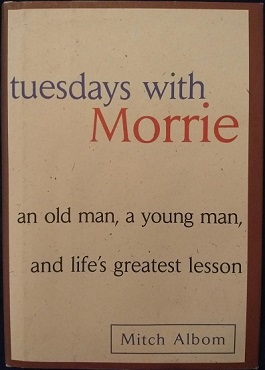
Tuesdays With Morrie: a review

Tuesdays With Morrie is a true story about a sport journalist, Mitch, who after 16 years of drowning his life in a fast paced career suddenly saw his old professor, Morrie, at one night in the television. The program told of how his teacher, who he used to be very close to, was dying from a disease called ALS or Lou Gehrig's disease and had decided to dedicate his remaining time to be what he called 'a human textbook' of dying to people around him. He didn't want to give up being a teacher until his last breath. Driven by remorse of breaking his promise to come visit after the graduation, Mitch flew to Boston to have a talk with him. He got more than a talk, he had lessons that changed his life.

Beautifully told, not unlike Morrie this book does not hold back scenes of emotional encounters. You'll find your eyes filled with tears from Morrie's forthright and honest notions. The book tells us how dying is a natural phase and should be less worrying than living unhappily. It also teaches us how we take precious things for granted because we think we will always have them, how we let time just passing by without really living the moments. I found some memorable lines that I think you might like too:

"love is the only rational act."

"what's wrong with being number two?"

"nothing haunts us like the things we don't say."

"learn how to die, and you learn how to live."

and many more, I don't want to spoil too much to you. :p

Another thing about this book is that it does not shove the lessons down your throat. Even though it falls under the category of 'self help' the book has a very subtle and simple way of narrating that it does not bore you. The other thing is that maybe it just shows us real conversations instead of formulating theories of how people should live their lives.

All in all, it is a very great book and I give it my full recommendation. A friendly reminder that as all of us know that we will eventually die, not as much really believe it. Do you?


cheers,
Shiddiq.

Sunday, April 21, 2013

Storyboard of my app / service

Please find below the storyboard of how my app / service might look like. This has been submitted as part of assignment 2 of the Human Computer Interaction course.


List five existing designs (inspirations) that relate to your thinking. The relationship could be very concrete or very abstract. For each design, give brief explanations (1-2 sentences) for why you chose those designs.
  1. Google Power Meter (http://www.google.com/powermeter/about/) is a good example on online electricity usage monitoring along with comparison to previous usage. Beautiful hourly-daily electricity usage graph is presented. Google dropped this project though. 
  2. Microsoft Hohm (http://www.optimumenergy.com/microsoft-hohm-review/) is a copy of Google Power Meter by Microsoft. However, compare to Google Power Meter, Microsoft Hohm could provide breakdown of energy usage by distribution (heating, lighting, etc.) and energy usage comparison with neighbourhood. Like Google, Microsoft also dropped this project. 
  3. Bidgely (http://www.bidgely.com/) came as alternative to Google Power Meter and Microsoft Hohm. Bidgely has their owned patented algorithm which could breakdown electricity usage even more detail. Their demo service on website shows some recommendation to reduce electrcity usage and integration with social networks. What a promising service to change the world's electricity usage habit in my opinion.
  4. Messages for Japan (http://www.messagesforjapan.com/) is an initiative from Google Japan collecting messages all around the world to support Japan during twin earthquake + nuke disasters in 2011. Simply clean, simple, interactive, and useful!
  5. Codeacademy (http://www.codecademy.com) is a good gamification example on encouraging students to code more. "Day streaks" indicator really encourages us to pratice code at least once in a day.
  6. Treehouse (http://www.teamtreehouse.com/) is first website that provides interactive badges for web learning that I know. Video rewards really encourage users to learn more. It keeps user wondering how the next video would be.


Which of the design briefs does your observation (from Assignment 1) fall under: Change, Glance, or Time? Explain what activity you observed and how it relates to the brief. Write down your Point of View.
My observation falls under the design brief of change.
Based on my observation that I did to 3 friends in 3 different countries, changing electricity usage habit of the people is a quite difficult task to perform due to cheap electricity cost in most of countries and unawareness of saving energy. Gamify this issue and social network engagement would be one of promising approaches to encourage people to use less electricity. 
By making people compete with friends on electricity usage, motivation to use less electricity would be increased. Social gaming apps on Facebook have proven the theory. Social game could attract more people because they are playing with their real friends, unlike unknown players in online multiplayer games and MMORPG the generations before social gaming. However, it is to be noted that I am not designing a game here, but socially gamify the issue to use less electricity.


Upload a comprehensive set of digital photos or scans of both of your storyboards.
Storyboard #1 - Compete with friends


Storyboard #2 - Challenge recommendations


Tuesday, April 16, 2013

Needfinding on Energy Conservation Apps


Which of the design briefs does your observation fall under: Change, Glance, or Time?
Explain what activity you observed and how it relates to the brief.
I decided to choose design brief of Change for this assignment.
Nowadays there have been many attempts to promote green energy as well as energy conservation in our live, for the sake of the earth, through many different ways in green technology. However, habit to use less energy/electricity is relatively new to most of the societies, especially societies in the emerging countries, one of the reasons is perhaps due to cheap electricity cost imposed there. I would like to develop web / mobile application which enable to promote how important energy conservation issue is, by analyizing the user's electricity usage habits and giving them suggestion on what to do to save electricity. I think some sort of gamification should be put inside the application to motivate users.
To start this needfinding step, I decided to observe electricity usage daily habit at first on 3 of my best friends, staying in 3 different countries (Japan, South Korea, and Indonesia), 3 different cultures, thus I could expect 3 different stories in observing the electricity usage habit so that it might enrich target goals of the design. Me myself are staying in India, so direct observation could not be done, all the observation was performed through messenger, skype, and telephone.


Describe how three people performed an activity related to the brief you chose. In particular, you should focus on a particularly interesting moment/breakdown/workaround from the observation. Upload a photograph or sketch of each person performing the described activity, with a short caption.
I observed the electricity consumption habits of the three candidates and asked their opinion about energy conservation importance. All of them are commonly do not aware of energy conservation issues since their monthly electricity bills are relatively cheap.
1. Shiddiq
Shiddiq is a 24 years old student studying in Tokyo, Japan. He stays in a foreign student dormitory. Japan must conserve energy a lot after Fukushima earthquake twin disasters in 2011, since all of nuclear power plants is shutdown in whole country. Below is my observation on his electricity consumption habits during weekend, days with his highest electricity consumption.
Electricity consumption habit on Saturday
It is spring season in Japan. Air conditioner is not required. Only refrigerator is turned on 24H in his room. Shiddiq turns off the light when he goes to bed. He wakes up 4AM every morning to perform the morning prayer, after turning on the light and going to toilet for ablution. He sleeps again and wakes up at 8AM. Light is not turned on during this time since the sun brightly shines outside already. He makes his own breakfast, usually a simple cereal with cold milk, and watches movies at the same time. He starts to turn on his PC, monitor, external hardisk, and speakers. He also charges his mobile phone during this time.
When lunch time comes, he goes to the kitchen to cook some foods and uses microwave. Hot water and stove in the kitchen uses gas, not electricity. He left his PC in sleep mode when going to the kitchen. He watches movie again in his room after lunch, and hangout with friends in the party room at evening. He says party usually consume a lot of electricity: big speakers, karaoke, and so on.
After party, he takes bath, goes to the common toilet, turns on the light and exhaust, and turns them off again after finish. However, he finds sometime exhaust is turned on by the previous person, meaning the previous person forgot to turn off the exhaust. He washes clothes after that, using two washing machines at the same time and one dryer. In total it requires around 3H to complete all the washes and dryers. Before sleeping, he watches movies again and turns off everything except refrigerator once he is ready to go to sleep.
Shiddiq pays approximately 3,300 yen (aprox. 30 USD) for monthly electricity consumption. He doesn't mind with the cost and agree that conservation energy is an important issue to be performed around the world, due to environmental matters. He feels that his habit is quite efficient and ideal.
Electricity consumption summary:
  1. 1 Room light
  2. 1 PC, monitor, speakers
  3. 1 Toilet light, 1 toilet exhaust
  4. 1 Refrigerator
  5. 1 Mobile phone battery charger
  6. 2 Kitchen lights
  7. 1 Microwave
  8. 2 Washing machines
  9. 1 Dryer
Breakdown: 1) using two washing machines to accelerate, 2) friends are wasteful
Shiddiq washes clothes once in a week by using two washing machines. One washing machine is insufficient since he has too many clothes collected in one week. 
After has finished taking bath, he turns off exhaust in the toilet. But his friends don't do it.
Opportunity: 1) suggestions / recommendations to reduce , 2) spreading the recommendation to friends
Shiddiq could only use one washing machine actually by washing them two times (i.e. Wednesday and Saturday). The recommendation to suggest some habit changes in reducing electricity consumption could be generated by the application based on user's particular habit. 
The recommendation feature should also be suggested to friends, through social media integration and sort of gamification to motivate them yet to make it fun.

2. Anggita
Anggita is a 24 years old student studying in Daejon, South Korea. She stays in a foreign student dormitory. Unlike Japan after disaster, South Korea primarily runs nuclear plants as their energy sources. Below is my observation on her electricity consumption habits during weekend, days with her highest electricity consumption.
Electricity consumption habit on Saturday
Anggita turns the light off when she sleeps and charges her mobile phone wholenight. She turns on refrigerator and room humidifier 24H. She starts sleeping at 3AM in the morning and wakes up at 8AM. The closing curtain makes the room dark, even at 8AM when the sun rises a bit high already. This makes her to turn on the room light. She takes bath in the morning and prepares for cycling with friends. The toilet in her dorm applies automatic lights. Thus, when someone goes inside, the lights will automatically be turned on and viceversa. When her friends are ready, she goes cycling outside for 25 km. What a super girl!
After coming back from cycling, she takes bath again. This time she shampoos her hair and uses hairdryer to blow hair. Similar to what Shiddiq does,  she goes party with her friends once she is ready. She does some activites in the common room as well for student union purpose, where projectors, microphone, and some other equipment are used. 19PM she goes back to her room and turns on the light. She doesn't turn off the humidifier when she goes out, so the room is pretty humid. Sometimes she also forgets to turn off the PC, she loves to watch movies on PC like Shiddiq. She uses microwave to cook instant noodles and rice.
Similar to Shiddiq, Anggita washes her clothes by using two washing machines to separate her clothes' color, separate between bright color and dark color clothes. She uses dryer afterwards. She sleeps quite late at night, turning on the room light more. The electricity price in South Korea is quite cheap, normally she spends merely 3,000 won (aprox. 3 USD) monthly, 10 times cheaper than what Shiddiq spends in Japan. She says energy conservation is not an issue in South Korea, since the country uses nuclear energy which is plentiful and clean. Yet the electricity bill is cheap.
Electricity consumption summary:
  1. 1 Room light
  2. 1 Notebook PC
  3. 1 Toilet light
  4. 1 Refrigerator
  5. 1 Mobile phone battery charger
  6. 1 Kitchen light
  7. 1 Microwave
  8. 2 Washing machines
  9. 1 Dryer
  10. 1 Hairdryer
  11. Hot water in the kitchen and toilet uses electricity
  12. 1 Projector, microphone
  13. 1 Humidifier
Breakdown: forget to turn off PC
Anggita sometimes left the PC on when going out and going to bed. She needs reminder to turn off the PC.
Opportunity: reminder to turn off PC
Application could have feature to remind user for turning off electrical appliance that is not required to on, in some particular conditions. 

3. Ramadhani
Ramadhani (Rama) is a 24 years old engineer working in Power Utility Company in Palembang, Indonesia. He knows a lot about electricity bills and energy stuffs since he works on this field. Recently Indonesia has changed their electricity bill system into pre-payment system, which makes the electricity consumers aware of their consumption and naturally turns them to use less energy on daily live. Below is my observation on Rama's electricity consumption habits during weekend, days with his highest electricity consumption.
Electricity consumption habit on Saturday
Palembang has hot temperature relatively stable whole year, higher than even Jakarta. This makes Rama turns his air conditioner whole night when he goes to bed. He turns off the air conditioner and changes to fan at 5AM, when he performs his Fajr prayer. Like other participants, he has refrigerator in his rented house which is turned on 24H. After he wakes up, he turns the TV on to watch news and soccer highlights. 
Rama plays game on XBOX whole day on lazy Saturday. He uses electric kettle to make hot milk or hot coffee to accompany him playing XBOX. He sometimes forget to turn off the fan whenever he feels comfortable. He washes clothes once in a week using one washing machine and dry them outside the house. 
Rama spends 100,000 rupiah (aprox. 10 USD) monthly for electricity consumption. In his opinion, using less electricity is important as long as it becomes habit of the consumers. In utility perspective, reducing electricity in a sudden manner could harm the generator in utility. Thus an activity like earth hour where all people turn off electricity in 1 hour is not a good idea. It would make operational cost higher. It is preferable to perform earth hour not only 1 hour but within longer 8 hour, so it could also maintain the utility operational cost.
Electricity consumption summary:
  1. 1 Room light
  2. 1 XBOX
  3. 1 Toilet light
  4. 1 Refrigerator
  5. 1 Mobile phone battery charger
  6. 1 Kitchen light
  7. 1 Television
  8. 1 Washing Machine
  9. 1 Electric kettle
  10. 1 Fan
  11. 1 Air conditioner
Breakdown: pre-payment system
Pre-payment system in Indonesia is indeed an effective way to reduce electricity usage of the consumers. 
Opportunity: electricity bill planning
Application could have feature to let user plan their electricity bill beforehand, and maintain the user's electricity consumption through auto-generated behavior recommendation.


Write a list of needs/goals/tasks inspired by what you observed (at least 15). If you brainstormed with others, please include their names in your submission.
  1. Each participant doesn't aware of the importance on world's energy conservation. They need some reading on energy emission, why renewable energy is being implemented nowadays.
  2. Anggita sometimes forgot to turn off her PC when going outside or going to bed. She needs a way to remind her turning off electrical appliances which are not needed at one time.
  3. Shiddiq's friend doesn't care with energy conservation. Shiddiq must have a way to share his efficient electricity consumption habit to his friends.
  4. Each participant uses two washing machines instead of one. There should be a way to generate recommendation to suggest user how to do an energy conservation in practical manner.
  5. Each participant doesn't aware which electrical appliances cost more and which are less. There should be a way to breakdown the electricity bill, into electrical cost per appliance.
  6. Breakdown electricity bill might require partnership with utility industry and complex installation of some equipment / sensors. There should be a simpler way, through a simple application to breakdown the electricity consumption without involving utility industry.
  7. Since energy conservation is a quite serious / boring issue, there should be a way to make it fun / gamify the issue.
  8. This is a bit complex, but there should be a way to automate the electrical appliances. Thus there is no way for user to forget appliances that must be shutdown or turned off.
  9. There should be a way to visualize electricity consumption on each appliance, so user will aware on which appliance consumes a lot of energy.
  10. There should be a motivation to decrease electricity consumption. This could also be encouraged through social competition with friends.
  11. User could install their own renewable energy source, i.e. solar plants, so no more dependency on paying electricity bills. This is costly at the beginning though.
  12. Pre-payment electricity bill would be an effective way to reduce electricity consumption of the consumers. This could be happened by installing the electricity meter which enables this feature.
  13. Installing electricity meter might be difficult since only utility company could do this. An alternative way is to suggest user to plan their electricity bill in web / mobile application.
  14. There should be feature to give user a kind of behavior recommendation to keep the electricity bill as per planned.
  15. There should be a tool so that user could schedule their daily electricity consumption i.e. use washing machine Tuesday 15:00-17:00, watch TV everyday 7:00-8:00, etc.

Wednesday, March 20, 2013

Telecommunication Update 2013


Written by Fadhilah Hana Lestari


Communication industry is potentially growing yet challenging market. Dan Alhamdulillah saya punya kesempatan untuk cicip-mencicip rasanya industri telekomunikasi.

Bersyukur sekali saya punya kesempatan magang di salah satu internet fixed line provider besar di Malaysia. Service mereka tergolong premium karena teknologi broadband yang digunakan 100% fibre optic yang artinya kualitas dan speed sangat terdepan. Tapi tentunya, this all come with prices 

Nah, perusahaan magang saya saat ini sedang dalam shock terapi karena tanggal 1 Januari 2013 kemarin LTE baru saja diluncurin. Saat ini jaringan LTE di Malaysia masih dalam coverage yang minim (hanya dapat diakses di beberapa area saja) dan device yang bisa digunakan juga sangat minim (dan shocking news-nya iPhone 5 tidak support dengan LTE Malaysia, lesson learned: jangan beli iPhone 5 di sini !!). Tapi walaupun begitu, siapa yang tau dalam setahun –atau bahkan 6 bulan- coverage dan device LTE mulai berkembang.

Tidak seperti Jepang dan Korea, LTE memang mainan baru di Malaysia. Kemunculan LTE memperkuat nilai mobile/wireless solution dalam teknologi broadband. Katakanlah ada pemuda tanggung yang sedang mencari jati diri pergi ke kota, menyewa kamar kosan. Dia melihat ada dua tawaran menarik:
  1. Internet fixed line. Kontrak minimal setahun. Speed 50 Mbps (stable). Unlimited quota. Harga sedikit mahal.
  2. 4G LTE. Bisa USB dongle, bisa beli bundled smartphone. Speed (up to) 40 Mbps. Limited quota. Bisa dibawa kemana2. Pindah kosan ga masalah.

Kalau saya jadi pemuda tanggung itu saya pasti akan memilih opsi 2.

Tapi contoh kasus ini ga bisa dijadikan patokan bahwa teknologi LTE telah membunuh fixed line. Ada industri-industri yang memerlukan kehandalan jaringan yang cuma bisa dipenuhi oleh fixed line service, contoh: IT, banking, stock exchange, dll.

Industri-industri ini bukan hanya sekedar memerlukan broadband untuk daily activity, tapi mereka memerlukan broadband agar bisnis mereka tetap berjalan dan berkembang. Apalagi trend jaman sekarang, video conferencing dan cloud computing digunakan dimana-mana. Barang tentu mereka lebih memilih fiber optic daripada teknologi wireless yang kekuatan sinyalnya tidak stabil dan memiliki limit quota.

Jadi kita tidak (atau belum) bisa menentukan siapa pemenang antara LTE dengan fixed-line.

Justru, diprediksikan di masa yang akan datang, bahwa integrated service itulah yang akan diimplemetasikan. 4G, Fibre, SIP, wireless internet leased line, dll, akan menyediakan service untuk customer baik individu atau perusahaan.

Malah sebenernya, yang perlu diwaspadai para voice dan internet service provider ini adalah ke-merajalela-annya para OTT (Over The Top) service. OTT service adalah layanan yang menyediakan aplikasi atau content, bisa dalam bentuk voice, data, video, dll menggunakan media internet. Mereka tidak perlu mengeluarkan biaya maintaining internet atau melakukan traffic management, tapi mereka menuai profit dari internet. Beberapa contoh OTT service: Facebook, Google, Skype, Whatsapp, LINE, Viber, Tango, dll.

Hal ini berdampak pada jumlah revenue yang didapat oleh operator telekomunikasi dari SMS dan voice call semakin menurun. Faktor bertambahnya jumlah pengguna smartphone di seluruh dunia juga turut membantu berkembangnya OTT service ini. Semakin ‘pintar’ ponsel mereka, semakin mudah juga pengguna mengirimkan SMS dan melakukan voice call melalui media internet. Cukup langganan salah satu paket broadband, smartphone kita bisa utilize-to-the-max.

Jadi sekarang bukan lagi masalah fixed line vs mobile. Tapi telco industry vs OTT player. OTT player sendiri sudah dianggap sebagai big market disrupter. Tidak sedikit perusahaan telco yang berkolaborasi dengan OTT service sebagai salah satu strategi bisnis mereka. Salah satu contoh simple: Beli paket perdana operator XYZ bisa gratis main Facebook selama 1 bulan. Ada juga perusahaan telco yang menciptakan sendiri OTT aplikasi (kalau tidak salah di Korea), tapi saya tidak terlalu tau bagaimana efeknya terhadap bisnis tersebut.

Kembali lagi kepada kalimat pertama saya, lagi-lagi dunia telekomunikasi menunjukan dinamikanya. Tahun 2013 ini direncanakan LTE Advance akan diluncurkan di USA, Jepang dan Korea. Di lain pihak, sistem Fibre Optic bawah laut (dengan kapabilitas speed dalam Tbit/s) sedang dikembangkan untuk mampu mentransfer data ke seluruh dunia menggantikan sistem komunikasi satelit (yang hanya memiliki kapabilitas speed di bawah 1Gbit/s).

Dunia telekomunikasi menarik, kan?